
Product design requires 3D modeling to turn ideas into accurate, realistic digital prototypes. It helps designers visualize the final product before manufacturing begins. 3D models make it easier to identify design flaws, test dimensions, and improve functionality. They also reduce material waste, production costs, and development time. With detailed 3D modeling, designers can communicate concepts clearly with engineers and manufacturers. Overall, it makes the product development process faster, more precise, and efficient.
What Is 3D Modeling in Product Design?
3D modeling in product design is the process of creating a digital, three-dimensional representation of a physical product using specialized design software. Designers build the product’s geometry, dimensions, proportions, surfaces, and details in a virtual environment before manufacturing begins.
The digital model becomes a shared reference throughout the product development process. Designers can refine it, technical teams can review its structure, manufacturers can use production-ready information, and marketing teams can create realistic visuals before the physical product is available.
With professional 3D modeling services from Lionup Digital, businesses can turn product concepts and references into detailed digital models that support visualization, presentation, prototyping, and marketing requirements.
Why 3D Modeling Has Become a Requirement, Not an Option
3D modeling is not valuable simply because it makes products look realistic. Its real value comes from solving several major challenges in product development.
Problem 1: Communication Breakdowns
A 2D sketch or written product brief can be interpreted differently by designers, engineers, suppliers, and manufacturers. A detailed 3D model gives everyone a visual reference they can review from multiple angles.
This reduces confusion and makes it easier to identify changes before production begins.
Problem 2: Physical Prototypes Can Be Slow and Expensive
Building a physical prototype requires materials, labor, time, and sometimes shipping. If the first major design review happens after the prototype is complete, correcting problems can become expensive.
3D modeling allows teams to review and modify concepts digitally before investing heavily in physical prototypes.
Problem 3: Manufacturing Has Three-Dimensional Constraints
Manufacturing requirements involve factors such as dimensions, wall thickness, tolerances, assembly fit, proportions, and product structure. These details can be difficult to evaluate accurately through flat drawings alone.
A properly prepared 3D model makes it easier to review these factors before manufacturing begins.
The result: 3D modeling gives teams a shared visual reference, allows earlier design testing, and helps identify potential manufacturing problems before they become costly production issues.
3D Modeling vs. Traditional 2D Design & Prototyping
| Factor | 2D Design + Physical Prototyping | 3D Modeling |
| Iteration speed | Days to weeks for revisions | Digital changes can be made quickly |
| Cost per design change | May require new materials and labor | Digital edits reduce material costs |
| Error detection | Problems may appear during prototyping | Issues can be identified earlier |
| Team alignment | Relies heavily on drawings and explanations | Everyone reviews the same 3D reference |
| Manufacturing preparation | Additional technical preparation may be required | Models can support production workflows |
| Marketing assets | Often requires a physical sample | Realistic renders can be created before production |
The main difference is timing. Traditional physical-first workflows often discover problems after more resources have already been invested. 3D modeling moves much of that discovery into the digital stage, where revisions are generally faster and easier.
The 6 Business Reasons Product Teams Can’t Skip 3D Modeling
1. Faster Iteration and Time-to-Market
Digital modeling allows product teams to test different proportions, shapes, materials, and design variations without rebuilding a physical sample for every change.
Faster iteration can lead to quicker approvals and help businesses move from concept development toward production more efficiently.
2. Lower Prototyping and Material Costs
Every physical prototype requires materials, labor, and production resources. 3D modeling allows businesses to review multiple concepts digitally before deciding which versions should move to physical prototyping.
This can reduce unnecessary prototype development and make product development budgets more efficient.
3. Catching Design Flaws Before Manufacturing
Design for Manufacturability (DFM) involves reviewing a product design against practical production requirements before manufacturing.
A detailed 3D model can help teams examine dimensions, tolerances, wall thickness, assembly relationships, and other important design factors before production begins.
Identifying these issues early can help reduce tooling changes, production delays, and unnecessary rework.
4. Better Cross-Team Collaboration
Designers, engineers, procurement teams, manufacturers, and marketing professionals may all have different priorities. A 3D model gives everyone a common visual reference.
Instead of relying entirely on verbal explanations, teams can review the actual digital product, identify changes, and communicate feedback more clearly.
5. Marketing and Sales Visuals Before Launch
One major advantage of 3D modeling is that businesses do not always need to wait for a finished physical product to create marketing visuals.
High-quality 3D renders can be used for:
- E-commerce product pages
- Product catalogs
- Social media campaigns
- Advertising
- Sales presentations
- Investor presentations
- Product launch materials
Lionup Digital can help businesses transform product concepts into professional 3D visuals that support both product presentation and digital marketing needs.
6. Reduced Material Waste
Digital testing can reduce the amount of physical trial and error required during product development. Businesses can evaluate different concepts before committing to materials and manufacturing.
Fewer unnecessary prototypes and failed production attempts can contribute to lower material waste and a more efficient development process.
How 3D Modeling Fits Into the Product Design Workflow
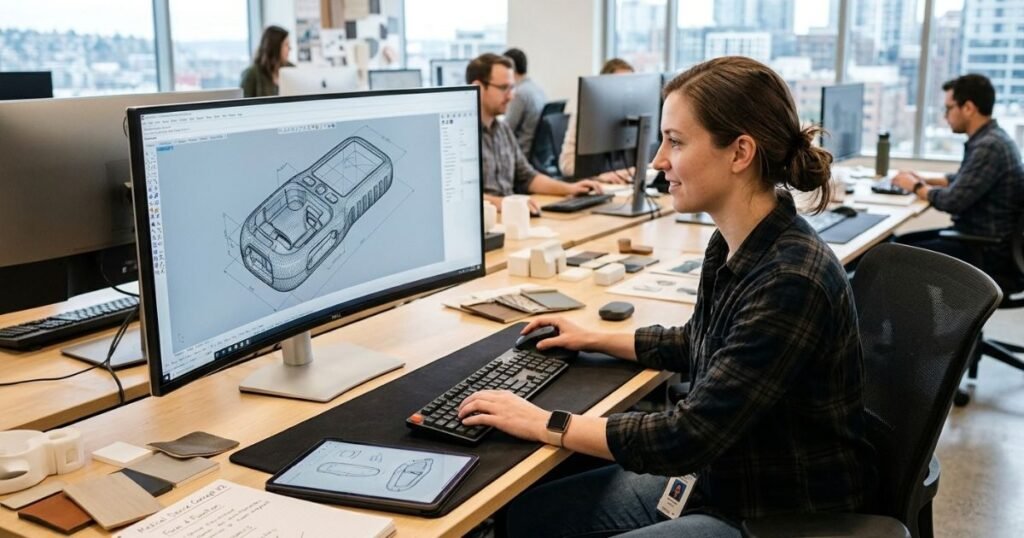
Ideation & Concept Sketching
The process starts with product requirements, reference materials, sketches, dimensions, and design objectives. These inputs establish the direction for the 3D modeling stage.
3D Modeling
The product geometry is created digitally based on its intended purpose, structure, and visual requirements. The model can then be refined according to feedback.
Texturing and Materials
Colors, materials, finishes, and surface details can be added to create a more realistic representation of the final product.
Simulation and Analysis
Depending on the project, the digital model can support different forms of technical analysis and design evaluation before physical production.
Rendering and Visualization
The completed model can be rendered into realistic images or animations for presentations, e-commerce, advertising, internal reviews, and stakeholder approvals.
Prototyping
Once the design has been reviewed and refined, the model can support rapid prototyping and physical testing where required.
Manufacturing Handoff
The finalized model and relevant technical information can be prepared for manufacturers and production partners according to project requirements.
Why It Matters Even More for Product Companies in the UAE
The UAE is home to businesses working across e-commerce, retail, real estate, furniture, consumer products, manufacturing, technology, and other industries. Many companies also work with suppliers and manufacturing partners outside the country.
For these businesses, 3D modeling offers several practical advantages.
Remote-First Supply Chains
A UAE company may have its design and marketing operations in Dubai or Abu Dhabi while working with manufacturers in other countries. A detailed digital model gives different teams a common reference for the product.
Faster Product Validation
When materials, components, or manufacturing resources come from international suppliers, identifying design problems digitally can reduce unnecessary sample and shipping cycles.
Flexible Outsourcing
Small and medium-sized businesses may not have dedicated in-house 3D modeling teams. Working with a specialized digital partner such as Lionup Digital allows businesses to access professional modeling support without building a full internal department.
Better Product Presentation
UAE businesses operate in highly visual markets where product presentation can influence customer attention and brand perception. High-quality 3D models and renders can help businesses present products professionally across websites, e-commerce stores, advertisements, and digital campaigns.
In short, 3D modeling can connect product design, visualization, prototyping, manufacturing, and marketing into a more organized digital workflow.
Professional 3D Modeling with Lionup Digital
Choosing the right 3D modeling partner is important because the quality of the final model can affect everything from product presentation to future marketing materials.
Lionup Digital provides digital design and 3D modeling support for businesses that need accurate, detailed, and visually appealing product models. The process can be tailored around the product’s specifications, intended use, visual requirements, and marketing goals.
Whether you need a model for product visualization, e-commerce, advertising, presentations, prototyping, or other digital applications, Lionup Digital can help create assets that fit your project requirements.
The goal is not simply to create a 3D object. It is to create a useful digital product asset that your business can apply across different stages of its workflow.
How to Choose a 3D Modeling Service for Product Design
Before selecting a 3D modeling provider, consider:
- Portfolio quality: Review previous product modeling work.
- Modeling accuracy: Make sure dimensions, proportions, and details are handled carefully.
- Visual quality: Check materials, textures, lighting, and rendering quality.
- Industry experience: Look for experience relevant to your product category.
- Communication: Confirm how feedback and revisions will be managed.
- File formats: Discuss the formats required for your website, marketing, prototyping, or manufacturing workflow.
- Turnaround time: Confirm the expected timeline before starting.
- Revision policy: Understand how many revision rounds are included.
- Project requirements: Provide product references, dimensions, materials, colors, and intended uses.
A clear brief at the beginning can make the modeling process smoother and reduce unnecessary revisions.
Conclusion
3D modeling has become an important part of modern product design because it helps businesses identify design issues earlier, improve communication, reduce unnecessary physical prototyping, and prepare products for manufacturing and marketing. For UAE businesses working with local or international teams, a detailed digital model can provide a reliable reference throughout the product development process. With professional 3D modeling support from Lionup Digital, businesses can turn product concepts into accurate and realistic digital assets designed around their specific project and marketing requirements.
FAQs
What is 3D modeling in product design?
3D modeling is the process of creating a digital three-dimensional representation of a physical product. It allows businesses to visualize, review, modify, and present a product before physical manufacturing begins.
Why do product designers need 3D modeling?
Product designers use 3D modeling to evaluate shape, proportions, dimensions, appearance, and other design details before creating physical prototypes. It makes it easier to test different concepts and identify potential problems earlier.
Is 3D modeling required for manufacturing?
3D modeling is not legally required for every manufacturing project, but it is widely useful in modern product development. A properly prepared digital model can provide manufacturers with detailed product information and support prototyping and production workflows.
How does 3D modeling reduce product design costs?
3D modeling can reduce costs by allowing teams to make and review digital changes before investing in physical prototypes, materials, tooling, or production. Finding design problems earlier can also reduce expensive rework.
What’s the difference between 3D modeling and CAD?
CAD refers broadly to computer-aided design tools and workflows used to create precise technical designs. 3D modeling is the process of creating three-dimensional digital objects. Depending on the project, 3D modeling can be used for engineering, visualization, marketing, prototyping, or other purposes.
What can businesses use a 3D product model for?
A 3D product model can support e-commerce visuals, product presentations, advertising, catalogs, animations, prototyping, product visualization, and other digital applications. The required model quality and file format depend on the intended use.