So, you have a million dirham idea, and you are ready to open your digital doors. That is amazing! But before you start counting your profits, there is one big, slightly scary question standing in your way: What is the real e-commerce website price in Dubai?
Let’s be real for a second. Searching for prices online can feel like trying to solve a puzzle with missing pieces. One agency quotes you the price of a fancy dinner, while another asks for the price of a luxury car. It is confusing, right? Whether you are looking for simple Shopify development in Dubai or a fully custom e-commerce website in the UAE, knowing exactly what you are paying for is the secret to success.
Key Factors Influencing Ecommerce Website Costs
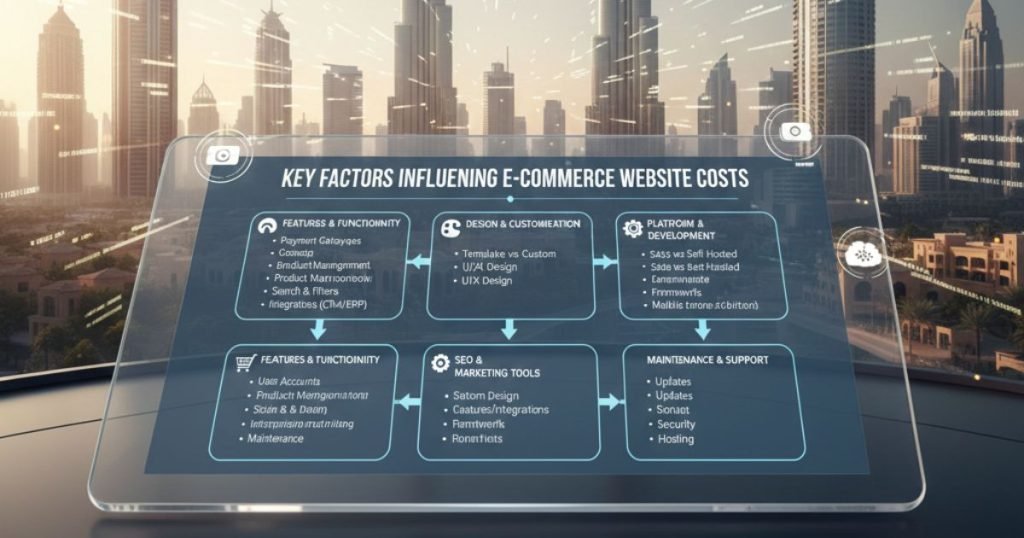
Think of building an ecommerce website like ordering a pizza. A simple cheese pizza is one price, but adding toppings like pepperoni, extra cheese, and mushrooms will cost you more. Your website works the same way. The final cost isn’t one size fits all; it’s a mix of different “toppings” you choose. Let’s look at the main ingredients that determine your final bill.
Platform Choice: Shopify, Magento, WooCommerce, or Custom Solutions
Your platform is the foundation of your online store. Using a ready made platform like Shopify or WooCommerce is like using a pre built pizza base, it’s faster and often more affordable. On the other hand, a custom solution is like making your dough from scratch. It gives you total control but requires more time and a bigger budget.
Design Complexity: Template vs. Custom Design
Do you want a simple, clean look or a jaw dropping design that wows every visitor? A template gives you a great looking site quickly, while a custom design is tailored to your brand, making it unique. The more custom the design, the higher the cost.
Features and Integrations: Payment Gateways, Logistics, and More
This is where you add your special features. You’ll need a way to accept payments (payment gateways), manage shipping (logistics), and maybe add a chat box for customer questions. Each feature adds a little more to the cost but makes your store more powerful.
Bilingual Support: English and Arabic Localization
In a diverse place like Dubai, speaking your customers’ language is a huge advantage. Adding both English and Arabic to your site makes it welcoming for everyone. This involves more than just translation; it means ensuring the design works perfectly for both languages.
Scalability and Future Proofing: Planning for Growth
Are you planning to sell 10 products or 10,000? A website that can grow with your business is a smart investment. Building for scalability means your site won’t crash when you get that first big wave of customers.
Comprehensive Cost Breakdown
Alright, let’s talk numbers. You want to know exactly how much cash you need to set aside, right? Think of this like buying a car. You can get a reliable sedan, a flashy sports car, or a massive truck that hauls everything. Here is what the price tag looks like for your online store in Dubai.
Basic Ecommerce Websites
This is your “starter pack.” Perfect for new businesses testing the waters. At this level, you get a clean, professional store using a template (a pre-made design). It works great, looks good, and lets you sell products immediately. You won’t get fancy custom features, but you will have everything you need to start making sales. It’s simple, effective, and budget friendly.
Mid Tier Websites
Now we are stepping up the game. This range is for businesses ready to grow. You get a unique design that stands out from the crowd, better bilingual support (English & Arabic), and smarter features like advanced product filters. It’s like upgrading from economy to business class, more comfort, better service, and a smoother ride for your customers.
Enterprise Level Solutions
This is the heavy lifting category. If you are a big brand needing to handle thousands of orders a day, sync with warehouses, and offer a totally custom experience, this is where you land. These sites are built from scratch to do exactly what you need, no matter how complex. It’s a big investment, but it powers big business.
Hidden Costs: Maintenance, Hosting, and SSL Certificates
Don’t forget the “keep the lights on” costs! Just like a car needs gas and oil changes, your website needs hosting (its home on the internet), SSL certificates (for security), and regular maintenance. Budget a little extra each year to keep things running smoothly and safely.
Unique Challenges in the UAE Market
Building an online store in Dubai isn’t just about picking pretty colors and uploading product photos. The UAE has its own set of rules and quirks that can surprise you if you aren’t prepared. Think of it like driving a car, you need to know the local road rules to avoid a ticket! Here are the unique bumps in the road you need to smooth out.
VAT Compliance and FTA Ready Invoicing
Taxes aren’t fun, but they are mandatory. In the UAE, your website must handle the 5% VAT (Value Added Tax) correctly. It’s not enough to just add 5% at checkout; your system needs to generate official tax invoices that meet Federal Tax Authority (FTA) standards. If your site can’t do this automatically, you’ll be drowning in paperwork later.
Arabic RTL (Right to Left) Design and SEO
Here is where things get tricky. Arabic is read from right to left (RTL), which means your entire website layout needs to flip when a user switches languages. The menu, the “Buy Now” button, and even the images need to feel natural for Arabic speakers. Plus, Google needs to understand your Arabic content to help local customers find you. It’s a bit like learning to write with your other hand, it takes practice and skill to get it right.
Local Payment Gateways
Shoppers in Dubai love convenience. While international options exist, using local heroes like PayTabs, Telr, or Stripe UAE builds instant trust. These gateways are designed for the region and often handle local currencies smoother than foreign ones.
Logistics and Delivery Integrations
In Dubai, “fast delivery” means really fast. Your website needs to talk directly to delivery giants like Aramex or Shipa. This automation lets you print shipping labels instantly and lets customers track their packages in real time, keeping everyone happy.
How to Choose the Right Development Partner
Picking the right person or team to build your website is like choosing a co pilot for a long flight, you need someone you can trust to get you there safely. The wrong partner can lead to delays, unexpected costs, and a website that just doesn’t fly. So, how do you find the perfect match for your business? Let’s break it down.
Agencies vs. Freelancers: Pros and Cons
Think of an agency as a big team of specialists. You get designers, developers, and project managers all under one roof. They can handle complex projects and usually offer ongoing support. A freelancer is a one person show. They can be more affordable and flexible, which is great for simpler projects. The choice depends on your needs: do you need a full pit crew or just one skilled mechanic?
Questions to Ask Before Hiring
Before you shake hands and sign a contract, you need to play detective. Ask them a few key questions to see if they are the real deal.
- “Have you built sites for businesses in the UAE before?”
- “Can you show me some examples of your work?”
- “How do you handle project delays or changes?”
Their answers will tell you a lot about their experience and professionalism.
Evaluating Portfolios and Client Reviews
This is your chance to see their work in action. Look at the websites they’ve built. Do they look good? Are they easy to use? Don’t just take their word for it, read reviews from past clients. A history of happy customers is the best sign that you have found a reliable partner who can bring your vision to life.
Beyond the Build: Ongoing Costs and Maintenance
Launching your website is a huge milestone, but the journey doesn’t end there. Think of your new site like a brand new car. You wouldn’t just drive it off the lot and never get an oil change, right? Your website needs regular care to stay in top shape, keep customers safe, and attract new visitors. Let’s peek under the hood at the ongoing costs you should plan for.
Annual Hosting and SSL Costs
Every website needs a place to live on the internet, and that’s what hosting is for. It’s like paying rent for your store’s spot online. You also need an SSL certificate, which is a small but mighty security guard for your site. It encrypts customer data, keeping it safe from hackers and showing shoppers that your store is trustworthy. These are usually annual fees, so be sure to budget for them.
Regular Security Updates and Bug Fixes
The digital world is always changing, and so is the software that runs your website. Regular updates are crucial to protect your store from security threats and keep it running smoothly. Sometimes, little glitches or bugs pop up unexpectedly. Having a maintenance plan means you have an expert on standby to fix these issues before they turn into major headaches for you or your customers.
SEO and Digital Marketing for Ecommerce Growth
Your shiny new website is live, now you need people to find it! That’s where Search Engine Optimization (SEO) and digital marketing come in. SEO helps your store show up on Google when people search for products you sell. This isn’t a one-time task; it’s an ongoing effort to climb the ranks and stay ahead of the competition. Think of it as putting up signposts all over the internet that lead directly to your door.
New Trends in Ecommerce Website Development (2026)
If you think websites haven’t changed much since last year, think again! The online world moves faster than a supercar on Sheikh Zayed Road. To stay ahead, you can’t just follow the crowd; you need to see what’s coming next. Here are the coolest trends shaking up e-commerce in Dubai right now.
Mobile First Design for UAE Shoppers
Did you know that most people in the UAE shop on their phones while sitting in traffic or chilling at a café? That’s why “mobile-first” isn’t just a buzzword; it’s a rule. We aren’t just squishing a big website onto a small screen anymore. We are building for the phone first. This means big buttons, easy scrolling, and checkout pages that don’t make you want to throw your phone across the room.
AI Powered Personalization and Chatbots
Imagine walking into a shop where the assistant knows exactly what you like. That’s what AI (Artificial Intelligence) does online. It shows customers products they actually want to see, not random stuff. Plus, smart chatbots are now so good they can answer questions instantly, 24/7, without sounding like robots. It’s like having a super-smart shop assistant who never sleeps.
Headless Commerce for Faster Performance
Okay, this sounds a bit spooky, but “headless” just means separating the front of your store (what customers see) from the back (the technical stuff). Why do this? Speed! It makes your website load lightning fast. In a world where nobody likes waiting, speed is your best friend.
Sustainability in Ecommerce Design
Green is the new black. Shoppers in Dubai care more about the planet now. Sustainable design means using cleaner code that uses less energy and highlighting eco friendly shipping options. It’s a small change that makes a big difference to the world, and your brand image.
Read More: How to Design an Ecommerce Website Homepage in UAE
Read more: How Much Does an Ecommerce Website Cost in Dubai?FAQs
How much does it cost to build an e-commerce website in Dubai?
It really depends on what you need! A basic website for a new startup can start around AED 15,000. For a growing business needing a custom design, you might look at AED 40,000 and up. Big enterprise-level sites can easily go over AED 120,000. It all comes down to the features and complexity you choose.
What are the hidden costs of running an e-commerce website in the UAE?
Great question! Don’t forget to budget for annual costs like website hosting (its home on the internet), your domain name, and an SSL certificate for security. You’ll also want a maintenance plan to cover security updates and bug fixes, which keeps your store safe and sound.
Should I choose Shopify, Magento, or a custom solution for my business?
If you’re starting out, Shopify is fantastic because it’s user friendly and affordable. If you have a huge inventory or complex needs, Magento might be a better fit. A custom solution gives you total freedom but costs the most. The best choice depends on your budget and business goals.
How important is Arabic localization for e-commerce websites in Dubai?
It’s super important! More than just translating words, true localization means making your site’s design and layout feel natural for Arabic speakers. It builds trust and can open your business up to a much wider audience in the UAE.
What is the average timeline for developing an e-commerce website?
A simple, template based site can be up and running in as little as 3-5 weeks. A more custom mid tier website usually takes about 8-12 weeks. Large, complex enterprise projects can take 4-6 months or even longer.
Conclusion
And there you have it! Now you know the inside scoop on what goes into the cost of an e-commerce website in Dubai. It’s not just about picking the cheapest option; it’s about making a smart investment in your business’s future. Building an online store is one of the most exciting steps you can take, and doing it right from the start will save you a world of headaches later on.