In today’s digital era, ecommerce website development services have become essential for every business. Whether you are a small startup or an established brand, a professional online store can take your sales to the next level. These services not only make your website visually appealing but also ensure it is user-friendly and fast, helping to build customer trust and improve conversions.
Understanding eCommerce Website Development
So, what’s all the buzz about eCommerce website development? Think of it like this: you’re building a brand-new, shiny store. But instead of bricks and paint, you’re using code and design. It’s the art and science of creating an online space where people can browse your products, add them to a cart, and buy them without ever leaving their couch.
The role of a developer in this process is like that of an architect and a master builder rolled into one. They take your vision—what you want your store to look like and how you want it to feel—and turn it into a real, working website. They make sure the “doors” open smoothly, the “aisles” are easy to navigate, and the “cash register” is secure. In short, they handle the technical magic so you can focus on selling your amazing products.
Key Considerations Before Starting Your eCommerce Journey
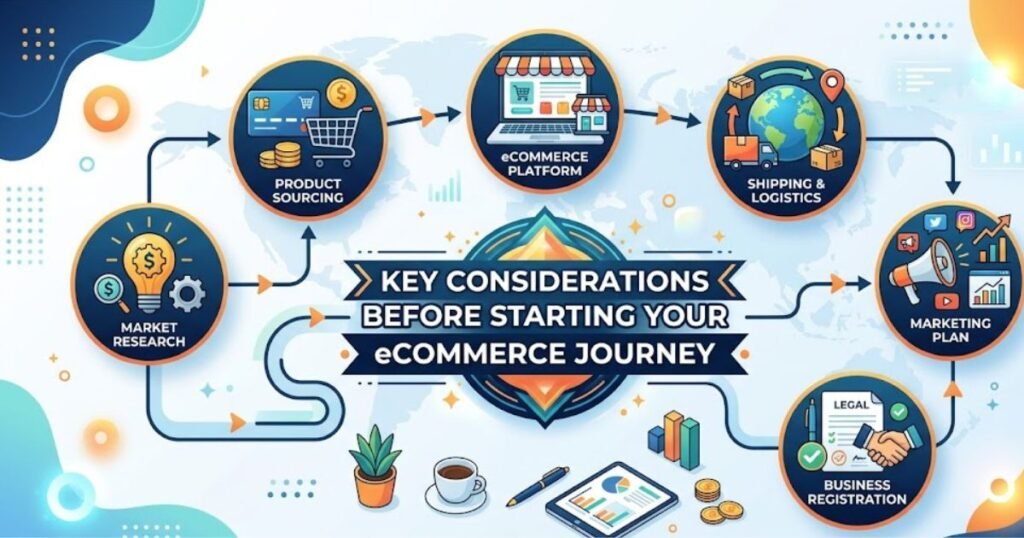
Jumping into building an online store without a plan is like going on a road trip without a map. You might get somewhere eventually, but it’ll probably be a bumpy ride. Before you dive in, let’s think about a few things to make your journey smoother.
Identifying Your Target Audience and Niche
Who are you selling to? Are they fashion-forward young adults in Dubai, families looking for organic groceries in Abu Dhabi, or tech enthusiasts across the Middle East? Knowing your audience helps you make smart decisions. It influences everything from the colors you choose for your website to the way you write your product descriptions. When you know who you’re talking to, it’s much easier to connect with them.
Setting Clear Goals for Your Online Store
What does success look like for you? Is it making 100 sales in your first month? Is it getting 1,000 visitors to your site every week? Or maybe it’s just about creating a beautiful online space that represents your brand perfectly. Setting clear, simple goals gives you something to aim for. It turns a vague dream into a measurable target, which is the first step toward achieving it.
Choosing Between Ready-Made Platforms and Custom Solutions
This is a big one. You can use ready-made platforms like Shopify or WooCommerce, which are like pre-built store templates you can customize. They are fantastic for getting started quickly and are often more budget-friendly. They offer great features and are user-friendly, making them a popular choice for many small businesses in Dubai.
On the other hand, you have custom eCommerce solutions. This is where a developer builds your website from scratch, just for you. It’s like getting a bespoke suit tailored to your exact measurements. This option gives you complete freedom and flexibility but usually takes more time and a bigger budget. The best choice depends on your specific needs, goals, and resources.
Must-Have Features for an eCommerce Website
To build an online store that people love to visit, you need a few essential features. These are the non-negotiables that can make or break the shopping experience for your customers.
Multilingual and Multi-Currency Support
In a wonderfully diverse place like the UAE, speaking your customer’s language is a game-changer. Offering your site in both Arabic and English is a great start. If you also allow people to see prices in their local currency, like AED, USD, or SAR, you make it incredibly easy for them to shop. It removes confusion and builds instant trust.
Advanced Search and Filtering Options
Imagine walking into a massive library with no catalog. Finding a book would be a nightmare, right? The same goes for your online store. A powerful search bar and easy-to-use filters (like sorting by size, color, or price) help customers find exactly what they’re looking for in seconds. A happy, non-frustrated shopper is much more likely to become a paying customer.
Seamless Mobile and Desktop Experiences
Did you know that over half of all online shopping happens on a phone? Your website needs to look and work beautifully on every device, from a tiny smartphone screen to a large desktop monitor. This is called responsive eCommerce design. If your site is clunky or hard to use on mobile, you could be losing a huge chunk of potential sales.
Secure and Fast Checkout Processes
The checkout is the final step in the customer’s journey, so you want to make it as smooth as possible. A slow, complicated, or insecure checkout is the number one reason people abandon their shopping carts. Offer trusted payment options, keep the process short, and ensure your site has an SSL certificate (that little padlock icon) to show customers their information is safe. This is a critical part of trustworthy eCommerce website development.
Unique Selling Points for UAE-Based eCommerce Websites
Building an online store in the UAE comes with its own unique set of opportunities. By catering to the local market, you can create a business that truly stands out and connects with the community.
VAT Compliance and Local Payment Gateways
Navigating local rules, like VAT (Value Added Tax), is essential for doing business in the UAE. An eCommerce platform that is VAT-compliant from the start saves you a lot of headaches down the road. Furthermore, integrating with popular local payment gateways like Tabby or Postpay gives your customers familiar and flexible ways to pay, which can significantly boost your sales.
Catering to Arabic and English-Speaking Audiences
We touched on this earlier, but it’s worth repeating. Providing a fully translated and culturally relevant experience for both English and Arabic speakers shows respect for your customers. It’s not just about language; it’s about using images and messaging that resonate with the local culture. This small effort can have a massive impact on how your brand is perceived.
Leveraging Hyperlocal Delivery Networks
People in the UAE love fast delivery. Sometimes, they want their items the very same day. Partnering with hyperlocal delivery services that can get your products to customers’ doorsteps quickly is a huge competitive advantage. Offering options like 2-hour delivery or next-day delivery can be a powerful reason for a customer to choose your store over another.
Emerging Trends in eCommerce Development
The digital world moves fast, and staying ahead of the curve can give you a serious edge. Here are a few exciting trends that are shaping the future of online shopping.
The Role of AI in Personalizing Shopping Experiences
Artificial Intelligence (AI) isn’t just for sci-fi movies anymore. In eCommerce, AI can act like a personal shopper for every visitor. It can recommend products based on what they’ve looked at before, power smart chatbots that answer questions 24/7, and help you understand customer behavior on a deeper level. This level of personalization makes shoppers feel understood and valued.
The Future of AR and VR in Online Shopping
Have you ever wished you could “try on” a new sofa in your living room before buying it? With Augmented Reality (AR), you can! This technology lets customers use their phone’s camera to see how a product would look in their own space. Virtual Reality (VR) takes it a step further, creating entire virtual showrooms. While still emerging, these technologies are set to revolutionize how we shop online.
Sustainable and Green eCommerce Solutions
More and more, customers care about the environmental impact of their purchases. Highlighting your commitment to sustainability can be a powerful selling point. This could mean using eco-friendly packaging, partnering with carbon-neutral shipping companies, or sourcing products from ethical suppliers. Being a green business isn’t just good for the planet; it’s good for building a loyal customer base.
How to Optimize Your eCommerce Website for Success
Launching your website is just the beginning. The real magic happens when you continuously work to make it better. Optimization is the key to turning visitors into customers and customers into lifelong fans.
SEO Best Practices for eCommerce
Search Engine Optimization (SEO) is how you help customers find your store on Google. It involves using the right keywords, like “best eCommerce web design in UAE,” in your product titles and descriptions. It also means making sure your site loads quickly and is easy for search engines to understand. Good SEO is like putting up a giant, welcoming sign for your digital storefront.
Conversion Rate Optimization (CRO) Techniques
Conversion Rate Optimization is all about making small tweaks to your website to encourage more people to buy. This could be anything from changing the color of your “Buy Now” button to simplifying your checkout form. A/B testing, where you show two different versions of a page to see which one performs better, is a powerful CRO tool. Even tiny improvements can lead to big increases in sales.
Leveraging Analytics to Improve Performance
Your website generates a ton of useful data. Tools like Google Analytics can tell you which pages are most popular, where your visitors are coming from, and at what point they might be leaving your site. By paying attention to these numbers, you can make informed decisions about what’s working and what needs improvement. It’s like getting a report card for your website every single day. The process of eCommerce website development should always include setting this up.
What Are the Hidden Costs of eCommerce Development?
Budgeting for your online store is crucial, and it’s important to look beyond the initial setup cost. Being aware of these “hidden” expenses will help you plan for long-term success without any nasty surprises.
Maintenance and Updates
Just like a car, a website needs regular tune-ups to keep it running smoothly. This includes software updates, security checks, and bug fixes. You might also want to add new features or refresh your design over time. Setting aside a small monthly budget for maintenance ensures your store stays secure and up-to-date.
Marketing and Advertising Expenses
Building a beautiful store is step one; getting people to visit it is step two. You’ll need a budget for marketing activities like social media ads, Google advertising, or collaborating with influencers. Think of it as the cost of getting the word out. Without marketing, even the best online store can feel like a secret whispered in the wind.
Scaling Costs for Growing Businesses
As your business grows, your website will need to grow with it. This might mean upgrading your hosting plan to handle more traffic, investing in more advanced software for inventory management, or expanding your customer service team. These are good problems to have, but it’s wise to plan for them. A scalable eCommerce platform is a must for any ambitious business. Professional eCommerce website development services will always consider this from the start.
Overcoming Common eCommerce Challenges
Every business faces hurdles. Knowing what they are ahead of time can help you prepare and overcome them with confidence.
How to Reduce Cart Abandonment Rates
It’s heartbreaking to see a customer fill up their cart only to leave without buying. The most common reasons for cart abandonment are unexpected shipping costs, a complicated checkout process, or being forced to create an account. Be upfront about all costs, make your checkout incredibly simple, and offer a guest checkout option.
Ensuring Data Security and Customer Trust
In an age of data breaches, customers are rightly concerned about their personal and financial information. Using a secure (SSL-certified) website, partnering with trusted payment providers, and having a clear privacy policy are essential. When customers feel safe, they are more likely to shop with you. This trust is the foundation of a successful online business.
Managing Inventory and Logistics Efficiently
Keeping track of your products and getting them to customers on time can be a huge challenge, especially as you grow. A good inventory management system that syncs with your website in real-time is a lifesaver. It prevents you from selling products you don’t have and helps you know when it’s time to reorder. Efficient logistics are key to happy, repeat customers.
Conclusion
Ecommerce website development services are the backbone of any successful online business. A professionally developed store ensures security, speed, and a seamless user experience that drives conversions. With the right platform, strategy, and optimization, businesses can scale faster and compete effectively in the digital marketplace. Investing in expert ecommerce development is not just about building a website — it’s about creating a sustainable online revenue system. Build smart, scale strategically, and sell confidently with the right ecommerce solution.
FAQs
What are ecommerce website development services?
Ecommerce website development services include designing, building, and optimizing online stores for businesses of all sizes. These services cover everything from UI/UX design, custom coding, and platform selection to payment gateway integration and security setup. A professional team ensures your website is mobile-responsive, fast-loading, and easy to navigate. They also implement essential features like product management systems, shopping carts, inventory tracking, and customer accounts. The goal is to create a seamless shopping experience that increases sales and customer retention.
How long does it take to develop an ecommerce website?
The development timeline depends on the complexity and features required. A basic ecommerce website may take 3–4 weeks, while a fully customized, feature-rich store can take 2–3 months or more. Factors such as design requirements, number of products, third-party integrations, and custom functionalities impact the timeline. Professional developers follow structured planning, wireframing, development, testing, and launch phases. Proper project management ensures timely delivery without compromising quality or performance.
Which platform is best for ecommerce website development?
The best platform depends on your business goals, budget, and scalability needs. Popular platforms like Shopify, WooCommerce, and Magento offer different benefits. Shopify is ideal for beginners and fast setup, WooCommerce works well for WordPress-based websites, and Magento is suitable for large-scale enterprises. A professional ecommerce development service provider analyzes your business model and recommends the most suitable platform. The right choice ensures long-term growth, flexibility, and cost-efficiency.
How much do ecommerce website development services cost?
The cost varies depending on design complexity, platform selection, features, and customization level. A basic ecommerce website may cost a few hundred to a few thousand dollars, while advanced custom solutions can require a larger investment. Additional costs may include hosting, domain registration, SSL certificates, maintenance, and marketing tools. Investing in professional development ensures better performance, security, and return on investment. A well-built ecommerce website pays for itself through increased sales and brand credibility.
Why is mobile optimization important for ecommerce websites?
Mobile optimization is critical because a large percentage of online shoppers use smartphones. A mobile-friendly ecommerce website ensures smooth navigation, fast loading speed, and easy checkout on all devices. Poor mobile performance can lead to high bounce rates and lost sales opportunities. Professional ecommerce developers use responsive design techniques to ensure your store looks and functions perfectly across devices. This improves user experience, boosts search engine rankings, and increases ove