
Types of logo design in Abu Dhabi play an important role in helping businesses build a strong brand identity in a competitive market. Common logo styles include wordmarks, lettermarks, pictorial marks, abstract logos, and combination marks. Each type serves a different purpose depending on the business industry, target audience, and branding goals, making logo design a key part of successful marketing.
Why Logo Design Matters for Your Business in Abu Dhabi
A logo does heavy lifting for your brand. In a competitive market like Abu Dhabi, visual real estate is expensive, and consumer attention spans are short. You need to make an immediate impact.
First impressions happen in milliseconds. When a potential client sees your storefront on Al Maryah Island or your targeted ad on Instagram, your logo dictates their initial perception of your professionalism. A polished, well-crafted logo signals trust, premium quality, and stability.
Brand recall is directly tied to visual simplicity and relevance. Abu Dhabi consumers are exposed to thousands of brands daily, from international luxury houses to local boutique startups. A distinctive logo anchors your business in these consumers’ minds. It ensures they remember you when they are ready to make a purchasing decision.
Furthermore, a strategic logo design builds brand equity over time. As your business grows across the Emirates, your logo becomes synonymous with your reputation. Investing in a professional design early prevents the costly need for a complete rebrand later as your company scales.
Types of Logo Designs Explained
Understanding the different categories of logo design is crucial. Each type offers distinct advantages depending on your brand name, industry, and marketing goals.
Here is a breakdown of the primary logo types used by businesses today.
| Wordmark (Logotype) | The company name styled in a unique typography without symbols. | Brands with short, catchy, and memorable names. | Real estate agencies or tech startups wanting clean, modern recognition. |
| Lettermark (Monogram) | Typography-based logo using the brand’s initials. | Companies with long, multi-word names. | Corporate firms (e.g., ADCB) streamlining their visual presence. |
| Pictorial Mark (Logo Symbol) | An icon or graphic-based design representing a real-world object. | Established brands that want a strong visual identifier. | Tourism companies using a recognizable local landmark or falcon. |
| Abstract Mark | A geometric form or abstract shape that represents your business conceptually. | Businesses wanting a completely unique, ownable image. | Investment firms conveying growth and forward-thinking dynamics. |
| Mascot Logo | An illustrated character that acts as the brand ambassador. | Family-focused, food, or sports brands. | Local cafes or entertainment centers targeting youth and families. |
| Combination Mark | A mix of a wordmark/lettermark and a pictorial/abstract mark. | Almost any business. Highly versatile and easy to trademark. | Retail brands needing flexibility for storefronts and social media. |
| Emblem | Text placed inside a symbol or icon, like a badge or seal. | Government entities, schools, or traditional businesses. | Academic institutions or heritage brands requiring an authoritative look. |
How to Choose the Right Logo Design for Your Industry
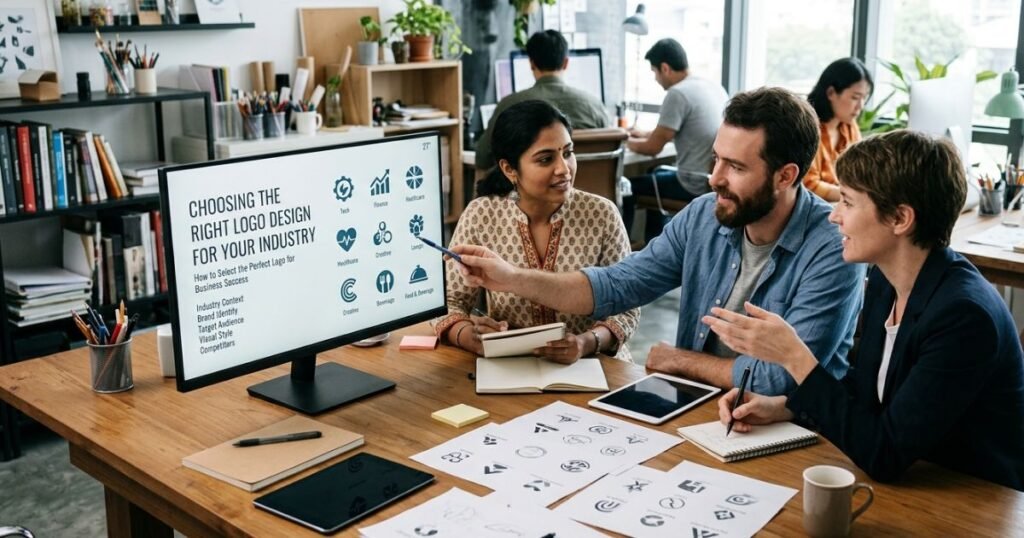
Selecting a logo type is a strategic business decision. The aesthetic must align with the expectations of your specific industry. Here is how to approach logo design across key sectors in Abu Dhabi.
Real Estate and Construction
The property sector requires logos that communicate stability, luxury, and structure.
- Recommended Types: Combination marks or Abstract marks.
- Style Notes: Use bold, architectural lines. Deep blues, golds, and silvers convey premium value and trust.
Hospitality and F&B (Food & Beverage)
Restaurants and hotels need to evoke emotion, comfort, and appetite.
- Recommended Types: Wordmarks or Mascots.
- Style Notes: Warm colors like reds, oranges, and earthy tones work well. Typography should reflect the dining experience—elegant scripts for fine dining or bold, playful fonts for casual eateries.
Technology and Innovation
Tech companies must look forward-thinking, agile, and clean.
- Recommended Types: Abstract marks or Wordmarks.
- Style Notes: Minimalism is key. Stick to flat designs, negative space, and modern sans-serif fonts. Vibrant blues and tech-greens are standard, but neon accents can help you stand out.
Healthcare and Wellness
Medical clinics and wellness centers must project a sense of hygiene, care, and reliability.
- Recommended Types: Pictorial marks or Combination marks.
- Style Notes: Soft, calming colors like teal, light blue, and green. Icons should represent health, growth, or human connection without being overly clinical.
Cultural Sensitivity in Logo Design for the UAE Market
Designing for Abu Dhabi requires a deep understanding of local culture and Islamic traditions. Ignoring cultural nuances can severely damage your brand’s reputation before you even launch.
Colors carry significant meaning in the UAE. Green is highly respected, representing Islam, prosperity, and the environment. Gold, black, and white are frequently used to symbolize luxury, strength, and purity. Avoid using colors that might clash with local sensibilities or inadvertently mimic political symbols if they don’t align with your brand.
Iconography must be chosen carefully. Avoid imagery that contradicts Islamic values. Symbols associated with alcohol, gambling, or inappropriate attire are strict red lines. Instead, many successful brands incorporate regional elements subtly—such as the UAE national tree (the Ghaf), falcons, dhows, or geometric Islamic patterns.
Respecting local laws is also non-negotiable. Ensure your logo does not misuse the UAE flag or government emblems, as there are strict regulations governing their commercial use. Always consult with a local branding expert to ensure your imagery is respectful and legally compliant.
How to Create a Bilingual Logo That Works
Abu Dhabi is a bilingual city. To maximize your market reach, your logo should ideally communicate in both Arabic and English. Crafting a cohesive bilingual logo is a highly specialized skill.
Step 1: Establish the Primary Language
Determine which language takes visual precedence based on your primary target audience, or aim for a perfectly balanced 50/50 visual weight.
Step 2: Match Typography Styles
The biggest challenge in bilingual logo design is making two distinct alphabets appear as a family. If your English font is sleek and modern, sans serif, your Arabic typography should use a modern, geometric Kufic script. If your English uses a classic serif, look for traditional, flowing Arabic calligraphy like Diwani or Thuluth.
Step 3: Align the Layout
Arabic reads right-to-left; English reads left-to-right. This directional difference affects balance. Combination marks are highly effective here. You can place your symbol in the center, with Arabic text on the right and English on the left, ensuring visual symmetry.
Step 4: Test for Legibility
A bilingual logo can easily become cluttered. Scale the logo down to the size of a social media profile picture. If the Arabic diacritics (dots and marks) or the English letters become illegible, you need to simplify the design.
Expert Insights What Makes a Logo Stand Out in Abu Dhabi
To build true brand authority, we look to the principles of E-E-A-T (Experience, Expertise, Authoritativeness, and Trustworthiness) in design. We spoke with senior brand strategists operating in the UAE to understand the anatomy of a top-tier logo.
“Simplicity scales,” notes a leading Abu Dhabi creative director. “Many local startups try to cram their entire business model into their logo. The most authoritative brands in the UAE use minimalist design. Think about the clean, recognizable marks of major airlines or telecom operators. They don’t over-explain; they project confidence.”
Expertise in local typography is another major differentiator. “Using a generic, auto-translated Arabic font is the fastest way to lose credibility,” a senior typographer advises. “Custom Arabic lettering shows that you respect the language and the market. It builds immediate trust with local consumers.”
Finally, versatility dictates long-term success. A logo must perform flawlessly across every touchpoint from a massive billboard on Sheik Zayed Road to a tiny favicon on a mobile browser. Responsive logo design, where the logo is simplified as it gets smaller, is a hallmark of expert branding.
Conclusion
Choosing the right type of logo design in Abu Dhabi is essential for creating a memorable and professional brand image. A well-designed logo helps businesses stand out, attract customers, and build trust in the market. By selecting the right style, companies can strengthen their brand identity and long-term recognition.
FAQs
What is the most popular type of logo design in Abu Dhabi?
Combination marks are highly popular because they offer flexibility. They allow businesses to use the icon independently for social media and the full bilingual text for official signage.
Do I absolutely need an Arabic version of my logo?
While not legally required for all private businesses, a bilingual logo is highly recommended. It broadens your appeal, shows cultural respect, and is necessary for official government documentation and specific advertising approvals.
How much does professional logo design cost in the UAE?
Costs vary widely. A freelance designer might charge between AED 1,000 and AED 3,000, while established branding agencies in Abu Dhabi can charge anywhere from AED 15,000 to AED 50,000+ for a comprehensive brand identity package.
What colors work best for luxury brands in the UAE?
Luxury brands in Abu Dhabi frequently utilize deep blacks, crisp whites, metallic golds, and rich emerald greens. These palettes convey exclusivity, heritage, and premium quality.
Can I use a free AI logo generator for my UAE business?
You can, but it is risky. AI generators struggle with proper Arabic calligraphy and cultural nuances. They also generate generic marks that cannot be effectively trademarked, leaving your brand identity unprotected.